
In This Article
I am an orphan. The last one standing. This little 1970’s JCPenney family, forgive the hair and outfits, I’m the only one left. I still don’t know how to make sense of that.
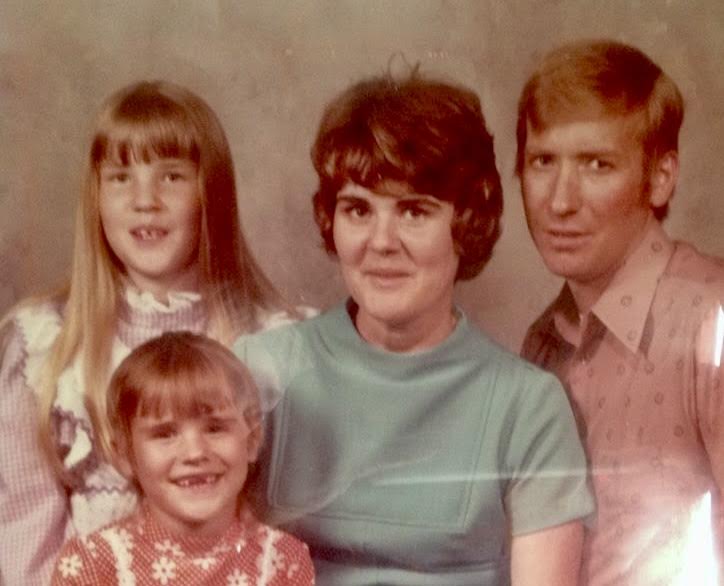
When people have asked me how and why I became a therapist, I would say grief. They would look at me with a bit of confusion mixed with a desire to slowly inch away. Talk about a conversation killer.
I don’t know if you have seen Amanda Peet’s interview about grief and loss but it’s really powerful and summed up my feelings more than anything else could.
I’ve come to understand that almost everyone who comes into my office is living with some kind of grief. The grief of loss, loneliness, job loss, struggle, cancer, cut off in relationships, the list is long.
Hear me out on how everything is grief.
I went to a grief retreat in Ireland two years ago and we had to read The Wild Edge of Sorrow by Francis Weller. If you’re not familiar, Weller does grief retreats and talks about grief as his life work. While reading the book I realized grief really IS everywhere. Weller talks about the 5 gates of grief and how they are all present in some form or fashion, in all of us.
What Are the 5 Gates of Grief?
Gate One
Everything We Love, We Will Lose
- Losing someone or something we love
- Loss of those who depart this Earth before us; our parents, spouse, children, friends
- Loss of home, beloved animals, places you have loved
- Loss from illness or injury; treasured skills and capacities
- Loss of a life dream
The first gate is what we traditionally think of when we think of grief – “Everything we love, we will lose.” I think of my little family, and how I’m the only one remaining holding our story(ies). I also think of people and pets I’ve lost and how that’s shaped me. When we think of grief, I think that’s what we consider most as grief.
Gate Two
The Places That Have Not Known Love
- Places in ourselves never touched by love
- Places wrapped in shame and banished
- Places lived outside of compassion, warmth and welcome
- Parts that we hate in ourselves and hold in contempt, that we deny the healing salve of community
- Outcast portions of our soul appearing as addictions, depression, anxiety and other symptoms calling for our attention
The second gate is the places in us that have no known love. The parts of ourselves we hide away due to shame or judgement. It is the grief of feeling unlovable or broken. I’ve never had a client that didn’t struggle with this gate. I’ve never met a human who didn’t for that matter.
Gate Three
Grief of the World
- The losses of the world around us
- Daily diminishment of species, habitats and cultures noted in our psyches
- Sadness for the Earth (not personal but shared and communal)
- Where we experience the soul of the world
Gate three is grief of the world. You look at the current state of affairs – Ukraine/Russian war, Ebola, Gaza, family separations, climate change, injustices, it just goes on and on. It’s hard to not absorb some of that and equally easy to feel helpless in our inability to change any of it.
Gate Four
What We Expected and Did Not Receive
Things we may never realize we have lost, because we weren’t born into a village with full joyous welcome of our gifts. And so we carry:
- Unconscious disappointment
- Feelings of loneliness and aloneness
- Diminished experience of who we truly are
At the core of this grief is our longing to belong and longing to be longed for.
Gate 4 is what we expected and did not receive. This is the grief of longing, the sadness that comes when we do not get the love, safety or community we needed growing up. Who got all they needed growing up? Who gets all the things they want now?
Gate Five
Ancestral Grief
Unacknowledged and untended sorrow of those who came before us, born of:
- Lost connection to land, language, imagination, rituals, songs, stories of their/our ancestors
- Sense of homelessness, orphaned between old and new worlds
- Experience of woundedness, loss and abandonment, where grief and shame are intermingled, residing in the psychic history of our lineage
- Collective soul grief of abuses of millions
Gate 5 is ancestral grief. The pain we carry from trauma, wars and hardships by those who came before us. This may be your family has a history of abuse, neglect, substance use, genocide, homelessness, etc. It’s things that aren’t directly spoken about but are present.
Other kinds of grief can be anticipatory grief (when a loved one is sick), ambiguous grief (a loved one is cut off/estranged, adoption, loss of ability(ies), etc. Those fall into the five gates but may not feel like they do in many situations.
What Are the Signs of Normal Grief?
First off, there is no normal. You might feel sadness, or anger, anxiety, or numbness. You won’t feel it all at once. It will come sometimes in ways you don’t expect and then in times you expect to feel grief, you feel none at all. It’s quite non-linear.
Grief can also have triggers – sometimes it’s seeing an avocado in the grocery store and the next thing you know, you’re crying, other times it’s anniversaries, birthdays, family events, even seeing intact families.
Part of a normal grief response, with any loss, is a reassessment of life. Am I living the way I want to? Do I have the same view of life now? Based on this loss, do I want to make changes? This can be life altering in the same way the loss was, a change in direction.
When Should You Consider Counseling?
There is no hard and fast rule. Some warning signs: turning to drugs and alcohol, extreme withdrawal, persistent, severe physical symptoms. When grief is occupying a lot of your time, and your level of functioning is low and you’re feeling overwhelmed and stuck, that’s a good time to consider counseling.
How Therapy Can Help With Grief
- Witnessing and sharing your story. Sharing your story, as many times as you need, for as long as you need. This is why grief groups (and groups in general) can be so powerful. Therapy is a place to do just this.
- Feeling whatever you feel – therapy is a space where you can feel whatever you feel with unconditional support and caring.
- Reassessment, exploration about what the grief means to you. What you want to do with the grief and the meaning making that is showing up for you.
- Rituals and symbolism – you might be able to work through your grief by writing letters, creating art, having a gathering, honoring of your person(s).
- Meaning making and spirituality, that’s ever changing. I can’t tell you how many clients have felt the presence of a loved one. They see them in a situation – hearing a song, seeing their favorite bird, feeling that they are near. This may or may not happen for you.
Resources
- The Wild Edge of Sorrow – Francis Weller
- It’s Okay That You’re Not Okay – Megan Devine
- All There Is podcast with Anderson Cooper
About the Author
This post was written by Lori Kimmerly, LMFT, founder and lead therapist at Lori Kimmerly Therapy and Coaching. Get to know more about Lori Kimmerly, LMFT.
You Don’t Have to Grieve Alone
Grief is one of the most isolating experiences there is. Lori Kimmerly, LMFT wrote this guide from her own experience of loss, and when you’re ready, she’d be honored to walk alongside you.